Handmade Terracotta: A Timeless Essential in UK & European Gardens
September 3, 2026
Handmade Terracotta Planters
September 5, 2026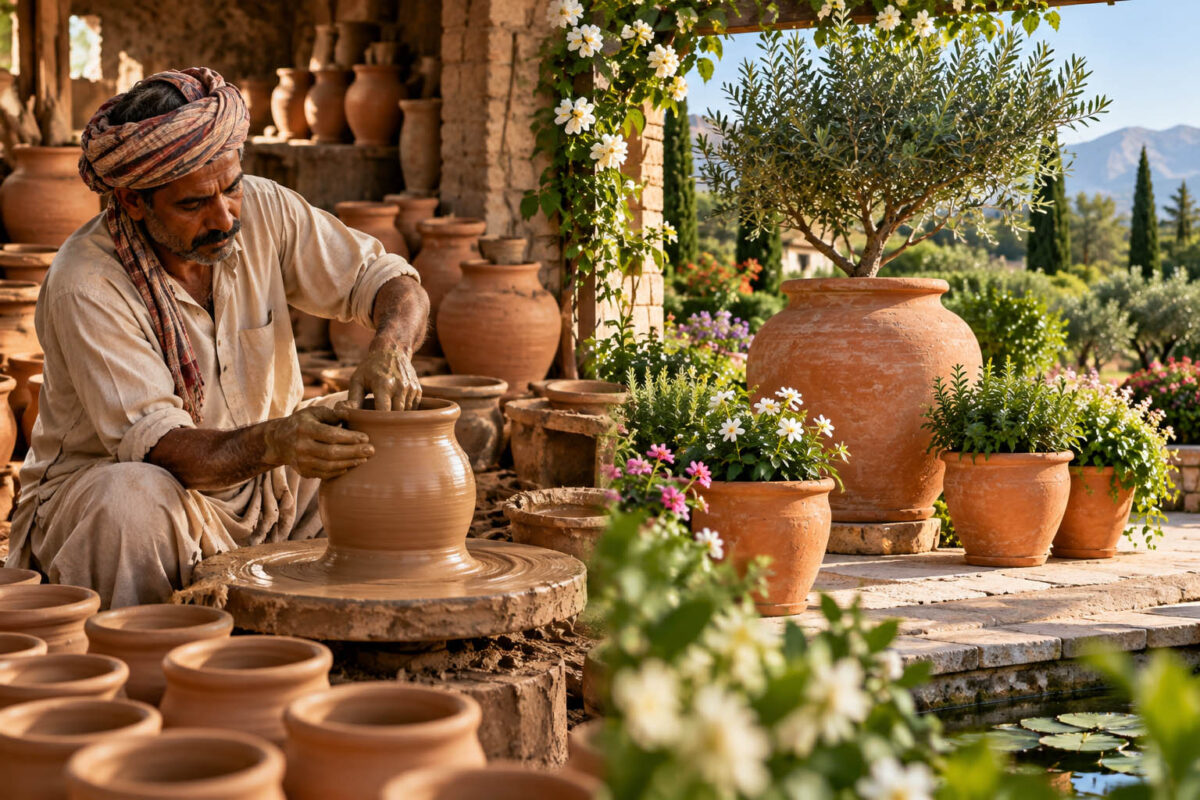
For centuries, gardens have been more than spaces filled with plants. They have been places of beauty, reflection, cultivation, and connection with nature. And throughout this long history of gardening, one material has remained remarkably timeless: terracotta.
From ancient courtyards and traditional European gardens to contemporary urban patios and landscaped spaces, terracotta continues to bring warmth, character, and a sense of tradition to gardens around the world. While modern gardens now offer an extraordinary choice of glazed ceramics, concrete, metal, stone, fiberglass, and other materials, the natural appeal of terracotta remains difficult to replace.
Its earthy colour, porous character, organic texture, and connection to traditional craftsmanship give terracotta a distinctive place in garden design.
A Tradition Rooted in Ancient Gardens
The use of fired clay in gardening dates back thousands of years. Ancient civilizations used clay vessels not only for storing water and food but also for growing and displaying plants.
Across the Mediterranean, the Middle East, Asia, and other parts of the world, clay pots became an important part of cultivated gardens. Their practicality was matched by their beauty: a simple handmade pot could become an integral part of a garden rather than merely a container for a plant.
The tradition continued through generations. Terracotta pots became particularly associated with European gardens, Mediterranean landscapes, courtyards, conservatories, and traditional estates. Their warm orange and earthy tones naturally complement green foliage, flowers, stone pathways, brick walls, and natural landscapes.
Even today, when garden design has become increasingly sophisticated, the humble terracotta pot continues to hold its own.
The Natural Character of Terracotta
One of terracotta’s greatest strengths is its natural character.
Unlike synthetic materials, terracotta is made from earth and transformed through fire. Every piece carries the visual qualities of its clay, firing process, shape, and craftsmanship.
Terracotta is also naturally porous. This allows the material to breathe and interact with its surroundings, making it particularly suited to traditional plant cultivation. The porous walls can absorb and release moisture, contributing to the natural environment around a plant’s roots.
But terracotta is valued for much more than its practical qualities.
It simply looks right in a garden.
Its warm, earthy appearance softens contemporary landscapes and adds authenticity to traditional ones. A collection of terracotta pots can make a patio feel established. A large terracotta planter can give an entrance a sense of permanence. Small terracotta pots can bring warmth to balconies, windowsills, shelves, and urban gardens.
The material ages beautifully, developing its own character over time.
The Importance of Indus River Delta Clay
Behind the production of quality terracotta lies something fundamental: good clay.
Pakistan is blessed with significant natural clay resources, including the rich clay deposits associated with the Indus River system and its delta. For generations, clay from this region has supported pottery and traditional ceramic craftsmanship.
The Indus River has shaped the landscape and civilizations of the region for thousands of years. Its sediments have carried minerals and fine earth across the plains, creating deposits that have long provided an important raw material for traditional pottery.
For Pakistani terracotta producers, the character of this clay is particularly important. Properly selected and prepared clay can provide the workability, texture, strength, and firing characteristics required to create quality pottery and garden products.
The story of a terracotta pot therefore begins long before it reaches a garden. It begins in the earth.
From Clay to Garden
Transforming natural clay into a finished terracotta product requires knowledge developed over generations.
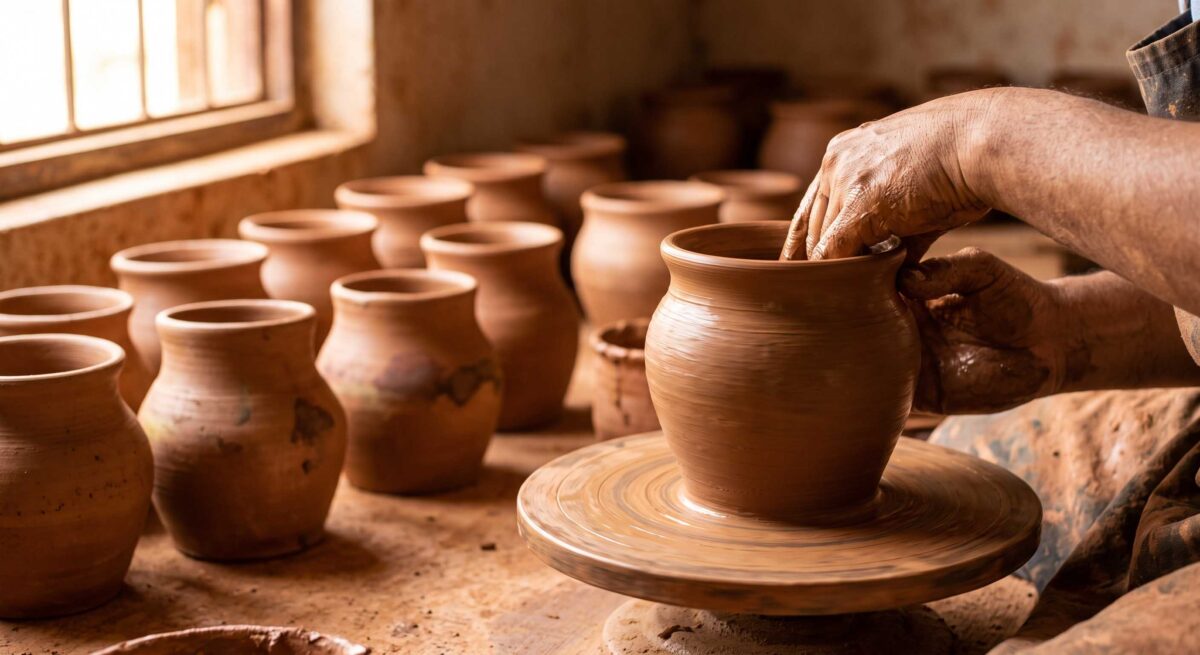
Clay must be selected, prepared, shaped, dried, and fired carefully. The process demands patience and experience. Small differences in clay composition, moisture, forming, drying, and firing can influence the final appearance and performance of a product.
This is where traditional craftsmanship remains extremely important.
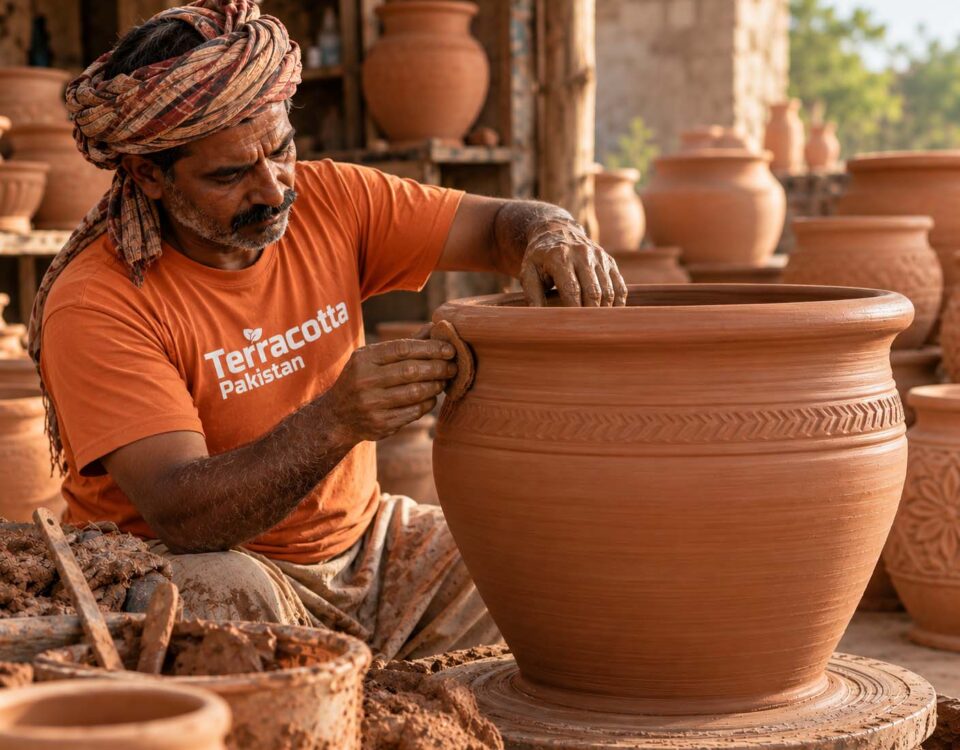
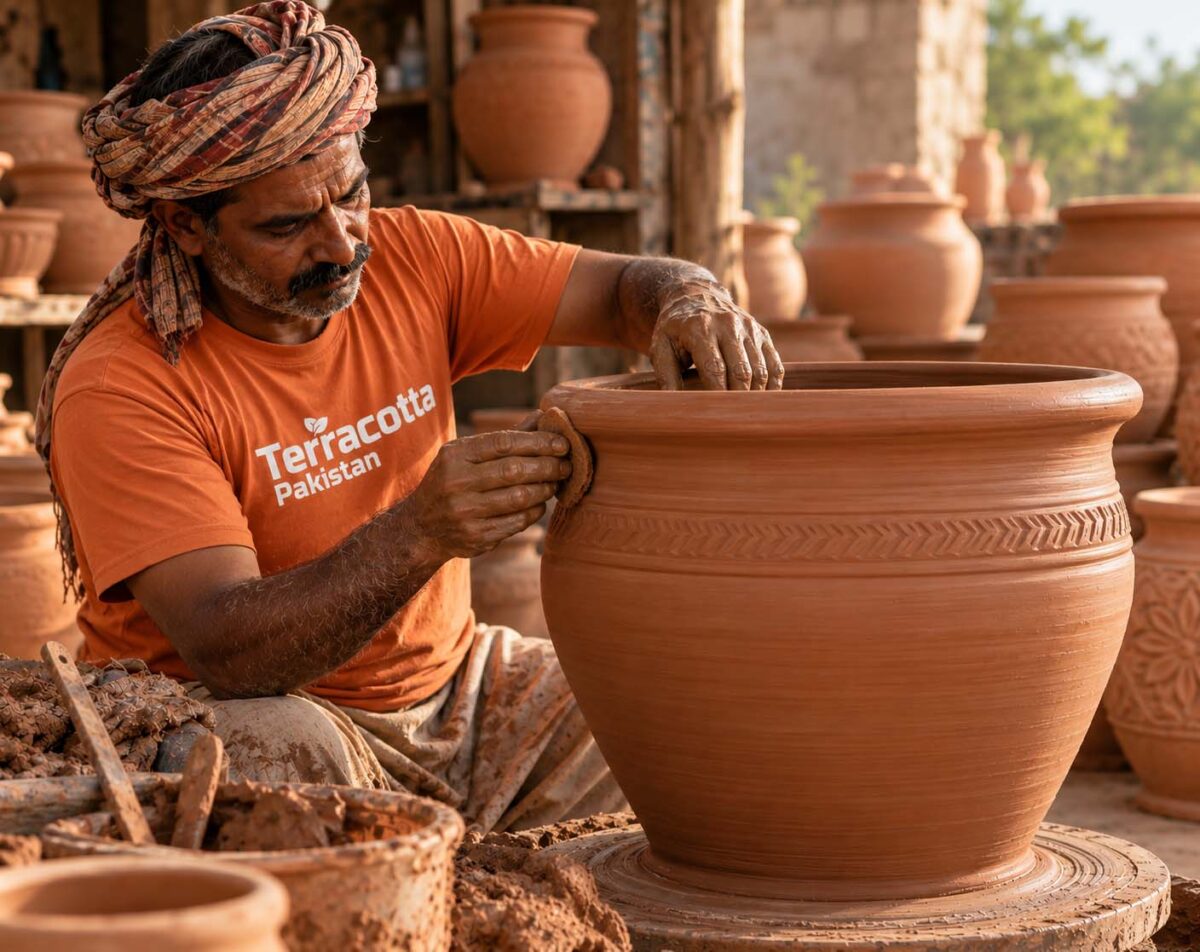
Behind many terracotta products are skilled craftsmen whose understanding of clay has been developed through years of practical experience. Their hands and knowledge continue to play an important role even as modern manufacturing techniques become part of the industry.
The combination of natural material, traditional skills, and modern production allows terracotta to remain relevant in today’s global garden market.
Why Terracotta Still Matters in Modern Gardens
Today’s garden enthusiast has more choices than ever before.
Glazed ceramics provide colour and decorative finishes. Concrete offers weight and contemporary forms. Metal creates a modern architectural feel. Fiberglass and composite materials provide lightweight alternatives. Stone offers a natural and substantial appearance.
Yet terracotta continues to occupy a special position.
Why?
Because terracotta brings something that many modern materials struggle to replicate: a connection to nature and tradition.
A terracotta pot does not try to dominate the garden. It complements it.
The earthy tones sit naturally beside plants. The texture works with stone, timber and brick. The material develops character as it ages. And its traditional appearance can make even a newly landscaped garden feel established.
For many gardeners, terracotta is not simply a container. It is part of the garden itself.
From Traditional Courtyards to Urban Balconies
The beauty of terracotta is that it is not restricted to large gardens.
In a countryside garden, large terracotta planters can create strong focal points. In a traditional courtyard, rows of pots can frame pathways and walls. On a modern patio, terracotta can introduce warmth into an otherwise minimalist setting.
Even in small urban spaces, terracotta has an important role.
A few carefully selected pots can transform a balcony, rooftop, terrace, or small patio into a living space. Herbs, flowers, succulents, ornamental plants, and even small trees can all find a natural home in terracotta.
As urban living continues to grow, these small touches of natural material become increasingly valuable.
Terracotta and the Beauty of Imperfection
Part of the attraction of traditional terracotta is that it does not need to be perfectly uniform.
Slight variations in colour, texture, surface, and firing can add character. Handmade pieces may carry subtle differences that demonstrate their human origin.
In an increasingly manufactured world, this sense of individuality has become valuable.
Garden design is increasingly embracing natural materials, organic textures, craftsmanship, and products that feel authentic. Terracotta fits naturally into this movement.
Its imperfections are often part of its beauty.
Terracotta Pakistan: Taking a Traditional Material to the World
At Terracotta Pakistan, we believe that Pakistani terracotta deserves a place in gardens around the world.
As Pakistan’s largest and the most prominent terracotta producers focused on bringing Pakistani terracotta products to international markets, Terracotta Pakistan works to connect the country’s rich clay resources and craftsmanship with customers across the globe.
Our work extends beyond manufacturing.
We see ourselves as part of an ecosystem that connects clay, craftsmen, design, manufacturing, gardens, and international markets.
By supplying terracotta products to multiple countries, participating in exhibitions, promoting Pakistani terracotta internationally, and working to integrate skilled craftsmen into a modern production environment, we aim to give traditional Pakistani craftsmanship a wider global platform.
The objective is not simply to export a product.
It is to share a material and a tradition.
Keeping Craftsmanship Relevant
Traditional craftsmanship can only survive when it remains connected to the modern world.
Craftsmen need opportunities to apply their skills. Traditional materials need markets. Products need to evolve with changing customer preferences while retaining their identity.
This is an important part of our approach at Terracotta Pakistan.
By bringing craftsmen, traditional techniques, modern manufacturing, product development, and international markets together, we believe it is possible to preserve the essence of terracotta while giving it a contemporary future.
The result is a product that can sit comfortably in a centuries-old European garden, a modern British patio, a Mediterranean courtyard, or a contemporary urban terrace.
The Timeless Place of Terracotta
Garden trends will continue to change.
Colours will change. Shapes will change. New materials will appear. Garden design will continue to evolve.
But some materials have a quality that transcends trends.
Terracotta is one of them.
It comes from the earth, is shaped by human hands, and is transformed by fire. It carries history while remaining remarkably relevant to modern life.
Whether it is a traditional handmade pot, a large garden planter, a collection of small nursery pots, or a contemporary terracotta design, the material continues to add warmth and character wherever it is placed.
Terracotta does not simply hold a plant. It helps create the atmosphere around it.
And that may be why, after thousands of years, terracotta still rules the garden.