Traditional Terracotta Continues to Bring Life to Gardens
September 5, 2026
Porous Nature of Fired Terracotta
September 5, 2026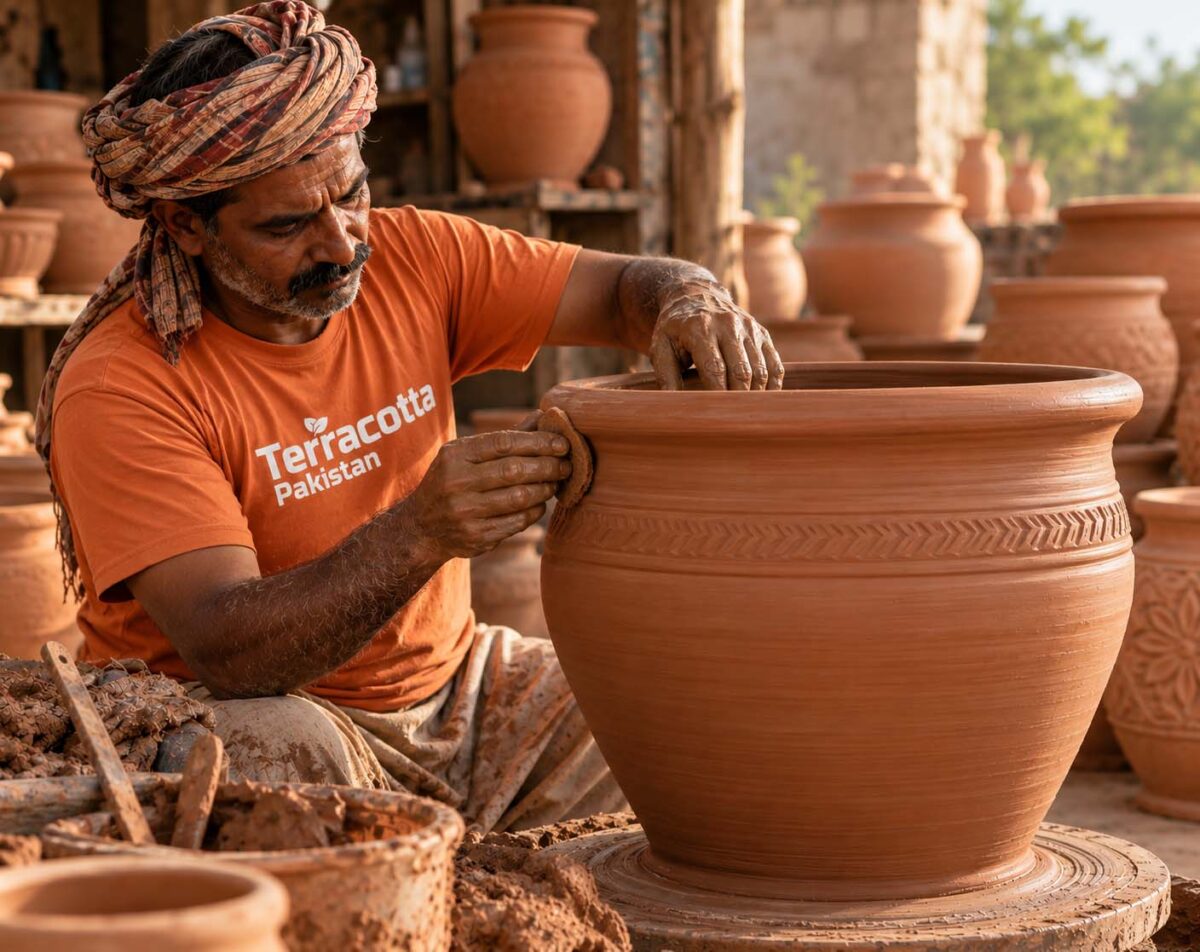
Where Traditional Craftsmanship Meets the Modern Garden
Technology has transformed the way products are made.
Advanced machinery, automated production lines and precision manufacturing have made it possible to produce garden products faster, more consistently and at greater scale than ever before.
Yet when it comes to gardens, there is something special about an object made by hand.
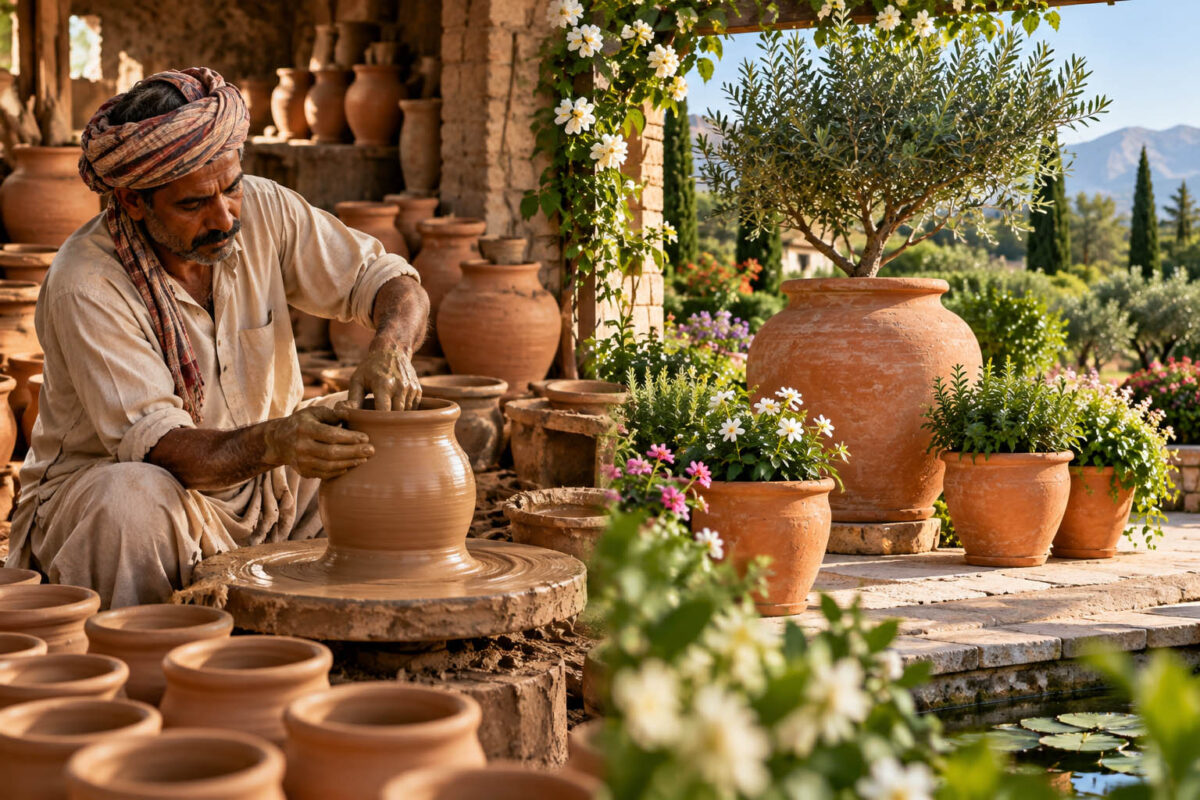
A handmade terracotta planter carries a character that mass production often struggles to reproduce. Subtle variations in shape, texture, colour and surface make every piece feel individual. Rather than looking perfectly manufactured, it looks naturally at home in the garden.
That is the enduring appeal of handmade terracotta planters.
The Premium Feel of Handmade
In a world where uniformity has become easy to achieve, individuality has become valuable.
A machine-made planter may be perfectly symmetrical. A handmade planter can have a slightly softer curve, an individual surface texture or a small variation in colour created during drying and firing.
These differences are not imperfections.
They are evidence of craftsmanship.
For garden designers, landscapers and homeowners looking to create distinctive outdoor spaces, handmade terracotta can add an immediate sense of quality and authenticity.
Placed beside natural stone, brick, timber, gravel and mature planting, handmade terracotta feels less like a manufactured garden accessory and more like an element that has always belonged there.
The Beauty of an Aged Look
One of the most desirable characteristics of handmade terracotta is its ability to look established.
A newly installed garden can sometimes feel too perfect or too new. Carefully selected handmade terracotta can soften that appearance.
The natural earthy colour of fired clay, combined with variations in texture and surface, can create an aged and timeless character from the very beginning.
As terracotta remains outdoors, exposure to weather, moisture, sunlight and surrounding vegetation can further change its appearance. Over time, pots can develop natural marks and patina that add to their character.
This is particularly valuable in traditional and heritage-inspired gardens, where the objective is often to create an environment that feels established rather than newly constructed.
Why Handmade Terracotta Belongs in Gardens
Gardens are inherently organic.
Plants grow differently. Leaves change with the seasons. Flowers bloom and fade. Stone weathers. Timber ages.
Handmade terracotta fits naturally into this environment because it also has an organic character.
Its warm clay tones complement green foliage and colourful flowers. Its natural surface works beautifully with stone pathways and brick walls. Large handmade planters can become architectural features, while smaller pots can introduce detail throughout a garden.
The material does not have to dominate the landscape.
It simply becomes part of it.
Every Piece Carries a Story
A handmade planter is the result of a series of human decisions.
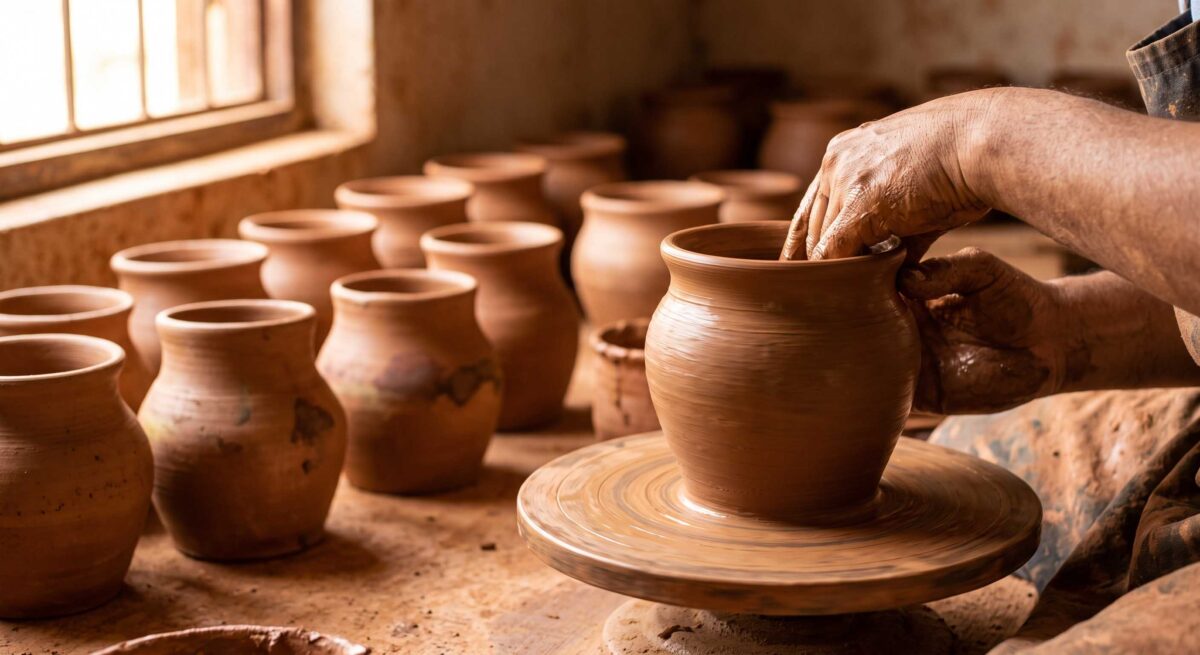
The clay is selected and prepared. The form is shaped. The surface is finished. The piece is dried carefully. It is then fired to transform the raw earth into a durable terracotta product.
Each stage requires experience.
The craftsman’s understanding of clay determines how the material should be handled. Experience influences the thickness, proportions, shaping and finishing of the product. Even the firing process can create subtle variations in colour and surface.
This is why handmade terracotta has a visual depth that is difficult to describe through specifications alone.
You can see the hand of the maker in the finished piece.
Traditional Craft in a Modern World
Handmade does not mean that technology has no role.
Modern production facilities can support traditional craftsmanship by improving clay preparation, firing control, quality management, logistics and consistency.
The opportunity today is to bring the best of both worlds together:
Traditional hands. Modern capabilities. Timeless products.
This approach allows craftsmen to continue working with techniques and knowledge passed down through generations while enabling their work to reach gardens far beyond their local communities.
It also provides traditional pottery with a sustainable place in today’s international market.
Craftsmanship Passed Through Generations
Pottery is among humanity’s oldest crafts.
Across the world, communities have developed their own methods of preparing clay, forming vessels and firing pottery. In Pakistan, traditional pottery has similarly been part of the cultural and economic fabric of communities for generations.
Many craftsmen involved in pottery come from families where knowledge of clay has been passed from one generation to the next.
For some, pottery is not simply a job learned from a manual.
It is a profession learned through observation, practice and experience.
The knowledge of how clay behaves, how it should be shaped, how it should dry and how it responds to fire is developed over years.
In many pottery communities, this knowledge has roots stretching back generations — preserving a living connection between today’s products and traditional craftsmanship.
Terracotta Pakistan: Specialists in Handmade Garden Pottery
At Terracotta Pakistan, handmade craftsmanship remains at the heart of what we do.
We specialize in the production of handmade terracotta planters, pots, garden features and other clay products, bringing together traditional craftsmanship and modern production capabilities.
Our craftsmen represent generations of experience with clay and pottery. Their skills help create products with the individual character that makes handmade terracotta so desirable for gardens.
Our role is not simply to manufacture a pot.
It is to help keep craftsmanship relevant.
By working with skilled craftsmen and connecting their abilities with contemporary garden design and international markets, Terracotta Pakistan helps give traditional Pakistani terracotta a place in gardens around the world.
Handmade for the International Garden
The appeal of handmade terracotta is not limited to one style of gardening.
It works beautifully in traditional English gardens, Mediterranean landscapes, contemporary patios, country estates, courtyards, balconies and urban terraces.
Large handmade planters can frame entrances and pathways.
Oversized vessels can become focal points in landscaped gardens.
Traditional pots can house herbs, flowers and ornamental plants.
Handmade clay garden features can introduce texture and architectural interest.
Because every piece has its own character, it can help make a garden feel less generic and more personal.
A Premium Material Without Losing Its Soul
Premium does not always mean complicated.
Sometimes premium means natural.
It means carefully selected material, skilled hands and attention to detail.
It means accepting that handmade products may have subtle variations — because those variations are part of their identity.
Terracotta offers this in a particularly beautiful way.
The material is simple: earth transformed by fire.
But the result can be remarkably sophisticated.
A large handmade terracotta planter placed beside mature planting can give a garden the appearance of having evolved over decades. A row of smaller handmade pots can create rhythm along a wall or pathway. A weathered terracotta feature can bring warmth to an otherwise contemporary space.
The possibilities are almost endless.
The Value of Imperfection
Modern manufacturing has taught us to appreciate perfect symmetry.
Handcrafting teaches us something different: the beauty of individuality.
A slight variation from one planter to another can make a collection feel more natural. A subtle difference in colour can create visual depth. A handmade surface can catch light differently throughout the day.
These characteristics give terracotta a personality.
And personality is precisely what many premium gardens are looking for.
Handmade Terracotta and Sustainable Design
The renewed interest in natural materials is also changing garden design.
Consumers and designers are increasingly interested in materials that feel authentic, durable and connected to nature.
Terracotta fits naturally within this movement.
Made primarily from natural clay and transformed through firing, terracotta has a long-standing place in architecture, gardening and pottery. Its natural appearance allows it to work harmoniously with other traditional materials such as stone, brick and timber.
Choosing handmade terracotta is also a way of valuing the people behind the product — supporting skilled craftsmanship and keeping traditional knowledge economically relevant.
From Pakistani Craftsmanship to Gardens Around the World
At Terracotta Pakistan, we believe Pakistani craftsmanship has a place on the international stage.
Pakistan possesses a deep history of pottery and clay craftsmanship, supported by natural clay resources and communities with generations of experience.
Our aim is to connect that heritage with today’s global demand for distinctive garden products.
Through handmade terracotta planters, pots and garden features, we bring together the character of traditional craftsmanship with the requirements of contemporary international customers.
The result is terracotta that carries a sense of origin while remaining relevant to modern gardens.
The Future of Handmade
The future of garden design will undoubtedly continue to embrace technology.
Advanced manufacturing will continue to improve efficiency. New materials and production techniques will continue to emerge.
But handmade products are unlikely to disappear.
In fact, their value may become even greater.
As more products become automated and identical, the things that demonstrate human involvement become more meaningful.
A handmade terracotta planter tells you that someone shaped it.
Someone handled the clay.
Someone understood the material.
Someone cared about turning earth into something useful and beautiful.
That connection is difficult to manufacture.
A Garden with Character
A beautiful garden is not necessarily the one with the most expensive products.
Often, it is the garden where materials feel right together.
Where plants, stone, water, timber, brick and pottery create a natural sense of harmony.
Handmade terracotta has the ability to bring all of these elements together.
Its warmth adds character.
Its natural surface adds texture.
Its traditional appearance adds history.
And its handmade nature adds individuality.
That is why handmade terracotta planters continue to hold a special place in gardens — even in an age of advanced technology.
At Terracotta Pakistan, we continue to believe in the value of the human hand.
From clay shaped by generations of craftsmen to planters finding their place in gardens around the world, we are proud to keep this tradition alive.
Handmade terracotta. Traditional craftsmanship. Timeless gardens.